 Azərbaycan
 Русский
 English
 Türkçe

When your air conditioner suddenly stops responding to the remote control, it can be a perplexing issue. Understanding the possible causes and solutions can help you restore your comfort quickly.
Understanding the Problem
When your AC is not responding to the remote, the first step is to determine whether the issue lies with the remote control or the air conditioning unit itself. The remote may have depleted batteries or internal circuitry issues, while the AC unit could have sensor or receiver problems.
Common Causes and Solutions
Batteries and Power: Before diving into more complex diagnostics, check the simplest possibilities. Ensure the batteries in the remote control are fresh and correctly installed. Sometimes, this basic step is all it takes to resolve the issue.
If the remote still fails, try turning on the AC manually using its control panel. If it works, the problem likely lies with the remote or its connection to the AC.
Infrared Signal Transmission
Most AC remote controls operate using infrared signals. A blocked or damaged infrared (IR) sensor on either the remote or the AC unit can cause communication failure. Ensure that there are no obstructions between the remote and the AC unit, and clean the sensors gently with a dry cloth.
Interference from Other Devices
Electronics and control system environments can sometimes interfere with infrared signals. Devices like fluorescent lights or other remote controls nearby can cause signal interference. Make sure the path between your remote and AC unit is clear of such interference to potentially restore functionality.
Resetting the Air Conditioning Unit
As a more advanced troubleshooting step, consider resetting your AC. Unplug the unit for a few minutes and then plug it back in. This can reset any glitches within the AC’s control systems. If you're unsure how to proceed, refer to the manufacturer's manual.
Another related article on AC Freezes On Start might provide insight into other potential issues related to remote control and AC functionality.
When to Seek Professional Help
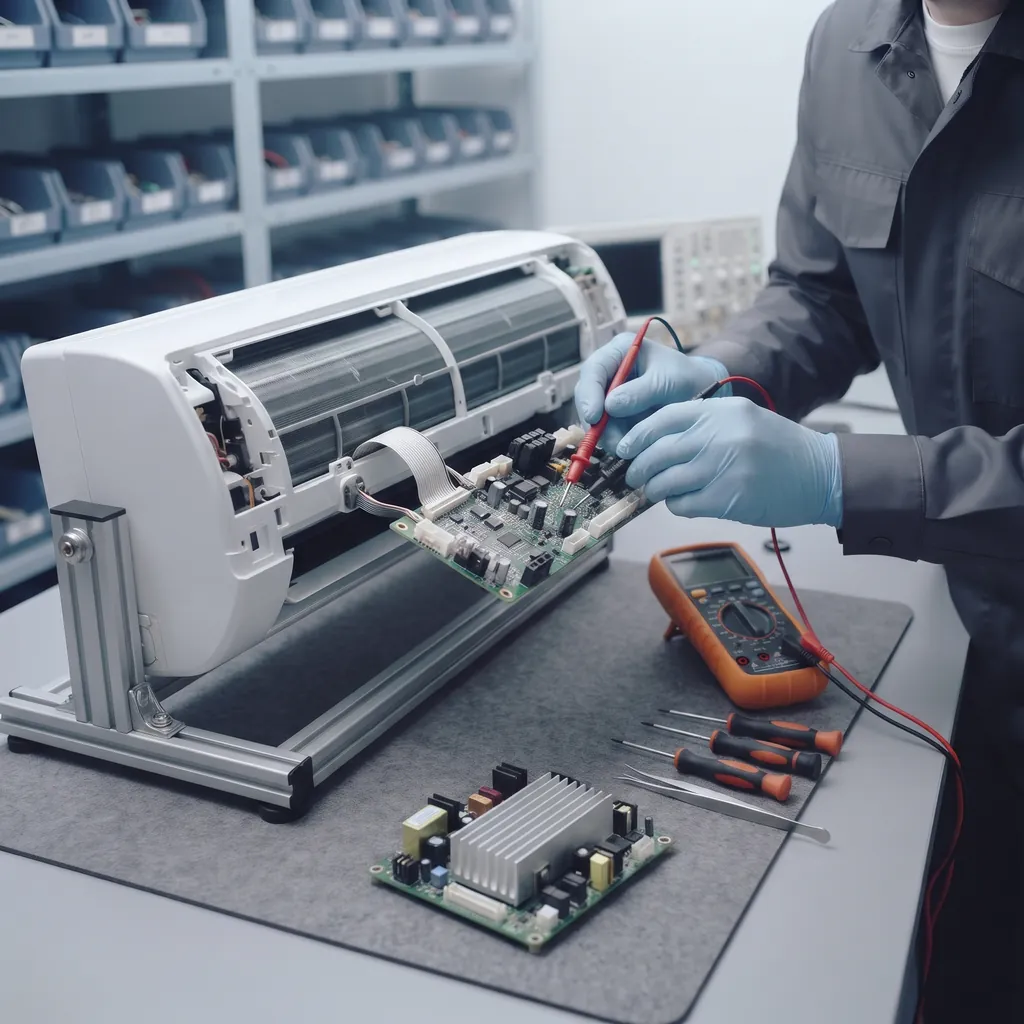
If all else fails, it may be time to call in a professional. Technicians can diagnose issues with the internal circuitry of the remote or the AC unit. They can also check for software updates or other technical problems that might not be fixable with basic troubleshooting.
Preventive Measures
To avoid future issues, keep up with regular maintenance of your AC system. Clean the filters and sensors regularly, and ensure the remote is stored in a safe place where it won't be damaged.
In conclusion, while an AC not responding to its remote can be frustrating, identifying the cause can often be a straightforward process. From simple battery changes to professional diagnostics, each step can bring you closer to a solution and help maintain a cool, comfortable environment in your home.
Why is my AC remote not working even with new batteries?
New batteries do not help when the problem is elsewhere:
- The batteries are inserted the wrong way round, or the contacts in the battery compartment are corroded.
- The infrared LED of the remote or its button membrane has failed. Check the LED with a phone camera: when you press a button, the camera shows a flashing light.
- The remote has been locked (child lock) or switched to another setting.
- The receiver on the indoor unit is blinded by bright light from a lamp or the sun, or is faulty.
- The board of the indoor unit does not respond at all — then the display and the emergency button do not work either.
If the camera shows the LED flashing but the unit does not react, the cause is in the receiver or the board of the indoor unit. We do not repair remotes, but we do repair the receiver and the control board of the air conditioner.
The AC turns on from the remote, the indoor unit blows air, but the outdoor unit doesn't run
If the indoor unit beeps, opens its louvres and blows air, the remote and the receiver are working — the command has been received. If the outdoor unit still doesn't start, the cause is no longer in the remote.
Check these yourself first
- Mode. In fan mode the outdoor unit is not supposed to run. Select cooling and set a temperature below the room temperature.
- Delay. Wait 3–5 minutes after switching on: the compressor protection does not start the outdoor unit straight away.
- Error code. Look at the indoor unit's display: take a photo of a blinking light or an error code — it shows where the fault is.
- Circuit breaker. If the outdoor unit is connected through its own breaker, check whether it has tripped.
What happens when the outdoor unit doesn't work, and can you leave the AC on
The indoor unit will just circulate room air — no cooling and no heating. For a short time this is not dangerous, but there is no point. If the display shows an error code or you hear the AC trying again and again to start the outdoor unit, switch it off: repeated starts strain the relay, the board and the compressor protection. On the electronics side, the cause is the communication line between the units, the outdoor unit's board or inverter module, a relay on the indoor unit's board, or the temperature sensors; we repair these boards at our service centre. Freon leaks and compressor mechanics are not our work.
Read more: AC compressor struggles to start, weak airflow AC, outdoor unit noise, blocked ventilation, AC repair, smart AC OS malfunctions, AC firmware failure, AC not heating, low freon, weak AC, when does an AC Need refrigerant, why AC not cooling properly, control board overload issues Explained.